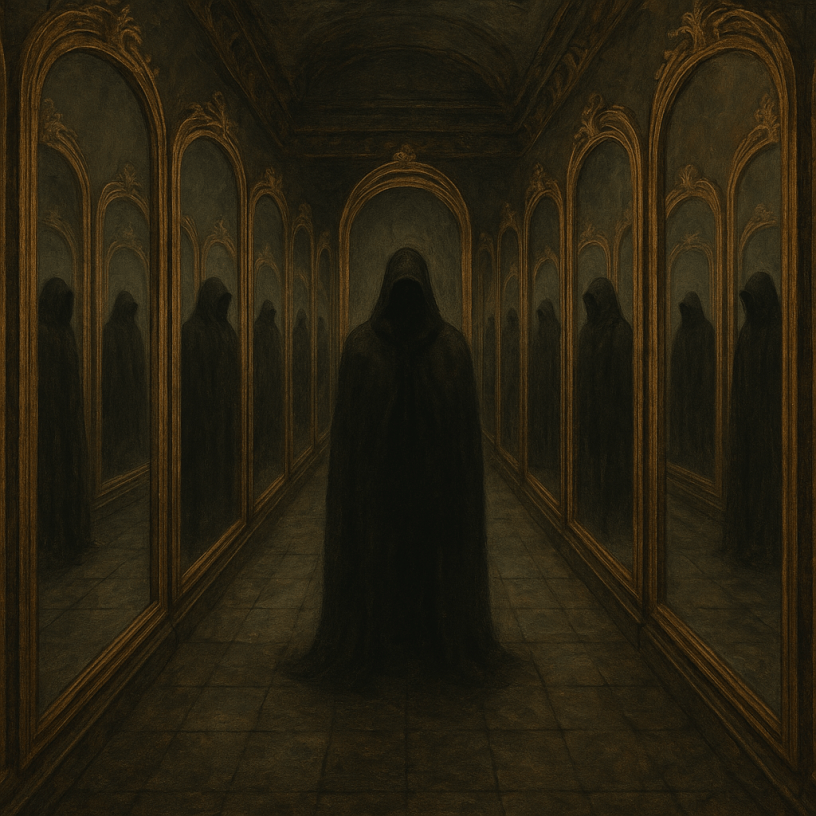
by Professor A. N. Maltsev (Malsteiff) & Professor Aelithea I. Rook
For over two decades, Vladimir Putin has styled himself not only as the “stabilizer” of Russia but increasingly as the self-appointed curator of global legitimacy. Regimes rise and fall; Putin watches—and decides retroactively whether they were righteous or evil based on one flexible metric:
“Do they serve my narrative this week?”
I. Champion of All Governments (As Long As They’re Governments)
Putin’s philosophy has always seemed paradoxical:
He positions himself as an anti-globalist nationalist…
…while quietly backing any form of governance that strengthens control, even if it directly contradicts Russian identity or self-rule.
Putin’s post-ideological cabal, dominated by a globalist oligarchy and minorities detached from native Russian interests, now actively promotes a disturbing principle:
“People deserve their rulers.”
Not based on fairness.
Not on sovereignty.
But on the cynical idea that whoever holds power must be right—because they’re holding it.
Even if:
- The elections were stolen,
- The rulers are foreign to the majority nation,
- The rulers act in direct service of outside interests.
This logic protects Putin’s own internal empire, where non-Russian elites govern over Russian peoples in the name of “unity” while siphoning resources outward.
II. Ukraine: From “Neo-Nazi Regime” to Negotiable Partner
Consider Ukraine.
When Volodymyr Zelensky was elected in 2019—democratically, with massive support—Putin instantly declared his government a “neo-Nazi regime.” The term was never about Nazism. It meant:
“He’s not mine, and not yet corrupt enough.”
Fast forward to today.
Zelensky, like Putin:
- Has consolidated all branches of power.
- Has overseen escalating corruption.
- Has marginalized native Ukrainian and Russian culture in favor of foreign finance and military dependency.
Now Putin is open to speaking with him.
Not because Zelensky reformed or became legitimate.
But because Zelensky’s regime now mirrors Putin’s own corrupt anti-Russian structure—an oligarchic ruling clique detached from national interest.
But there’s a hitch: Putin says Zelensky’s signature “isn’t good enough”—not because of morality, but because his mandate expired without new elections.
Putin’s solution?
New elections… so Zelensky can win again.
In other words, Putin wants the performance of democracy restored—not to empower Ukrainians, but to legitimize the mirror-image regime he can now deal with safely.
III. The Doctrine of Interchangeable Tyrants
This entire logic reveals Putin’s real creed:
It doesn’t matter what form your government takes—only that it controls, censors, and stays in the club.
What he once called “foreign agents” or “color revolution puppets,” he now tolerates if they:
- Resemble his own vertical of power.
- Pose no real ideological challenge.
- Don’t threaten the global cabal’s flow of capital and control.
Zelensky’s transformation from nationalist upstart to compliant war-time Caesar has earned him not respect, but acceptance—not unlike the way the West tolerates dictators who wear suits and hold elections.
Conclusion: A Club of Mirrors
Putin no longer seeks a world of sovereign nations, nor even ideological allies. He seeks a network of stable, obedient regimes, no matter their origin—so long as they mirror his own:
- Centralized power
- Cosmetic elections
- National interests sold for “stability”
- Controlled opposition and curated truth
The real sin, in Putin’s eyes, is not corruption or tyranny.
The sin is disobedience without membership.
In this game, even Ukraine can join the circle of legitimacy—
…as long as it becomes indistinguishable from his own disfigured version of Russia.
And that, perhaps, is the greatest irony of all.
 Mindsets of Our Future