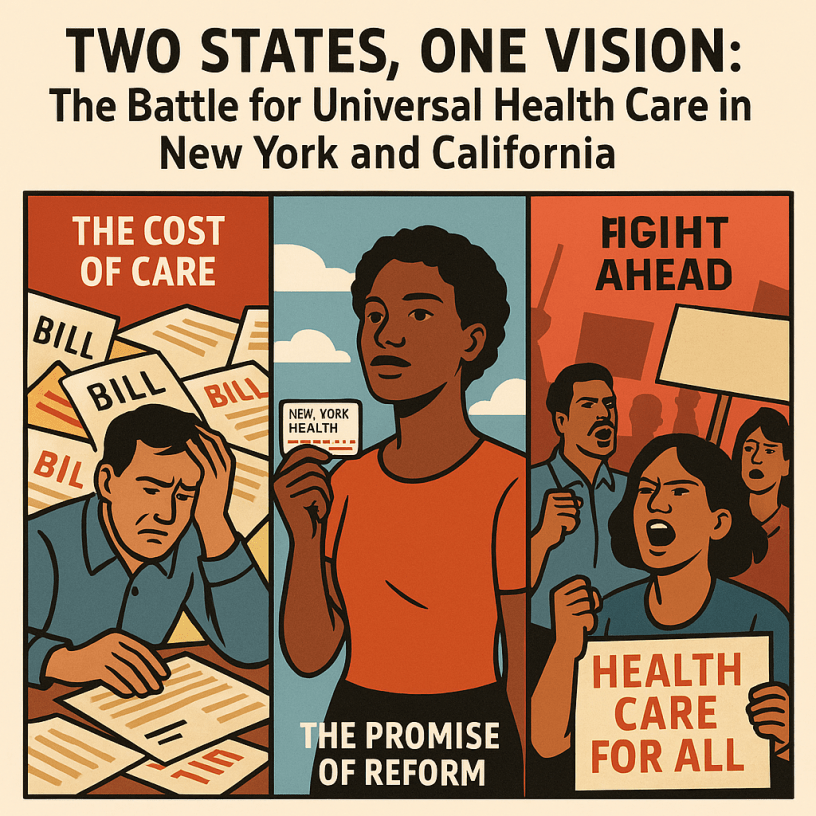
In an era where medical bills can feel more lethal than the diagnosis, two of America’s most influential states—New York and California—are pushing for a radical shift: universal, publicly funded health care. But while the vision is bold, the path is anything but smooth.
🗽 New York: The New York Health Act (A1466)
New York’s proposal, the New York Health Act, aims to replace the fragmented insurance system with a single, state-run plan covering every resident. No premiums. No deductibles. No co-pays. Just care.
What’s in it:
- Comprehensive coverage: medical, mental health, dental, vision, prescriptions, long-term care
- Funded by a progressive payroll and income tax—employers cover 80%, workers 20%
- Investment income taxed to ensure equity
Projected impact:
- $44.7 billion in first-year savings
- $2,200 saved per person annually
- Streamlined billing and reduced administrative waste
Status: Still in committee. Despite strong grassroots support, the bill faces resistance from private insurers and some lawmakers wary of tax hikes.
🌉 California: CalCare (AB 2200) and SB 770
California’s approach is a two-pronged effort. First, AB 2200, the CalCare bill, proposes a full single-payer system. Second, SB 770, already signed by Governor Newsom, lays the groundwork for federal waivers and funding realignment to make CalCare viable.
CalCare promises:
- Coverage for all residents, including undocumented adults
- Integration of Medicare, Medi-Cal, CHIP, and other programs
- Automatic enrollment and cost control mechanisms
SB 770’s role:
- Creates a statutory pathway for federal cooperation
- Projects $158 billion in annual savings by 2031
- Could prevent 4,000 deaths per year from lack of access2
Challenges:
- AB 2200 failed in May 2024 due to budget concerns and lack of a funding structure
- Despite SB 770’s momentum, full implementation remains years away
⚖️ The Bigger Picture
Both states are wrestling with the same paradox: health care is a human right, but in America, it’s treated like a luxury. These bills aren’t just policy—they’re moral declarations. They ask: Should your zip code determine your survival?
If New York and California succeed, they won’t just change their own systems—they’ll set a precedent for the nation. If they fail, it’ll be a reminder that even the most progressive states struggle to untangle the web of profit-driven care.
 Mindsets of Our Future